How to Secure a Mac Mini or Mac Studio Amid Ongoing Supply Shortages
Introduction
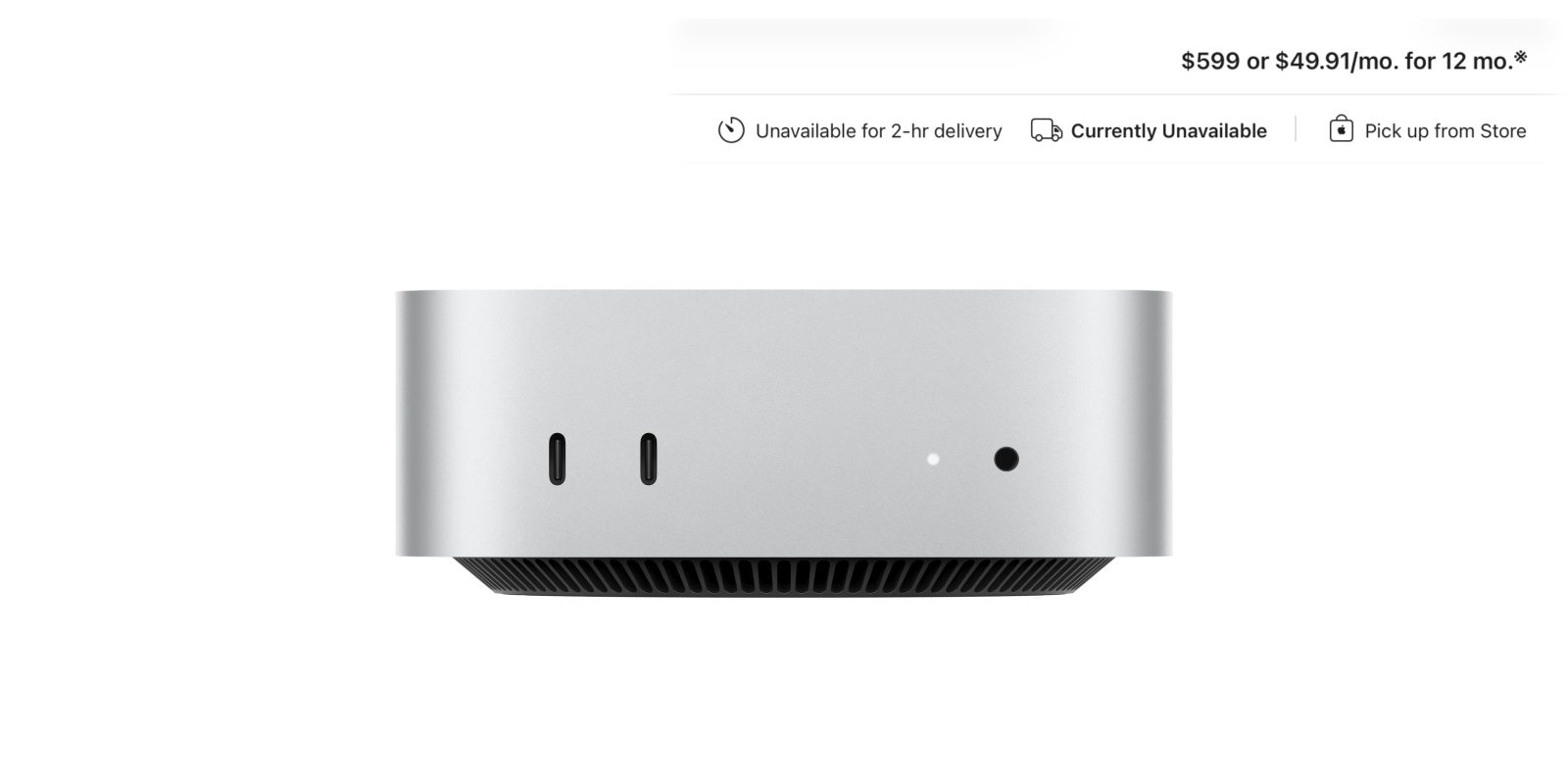
On Apple's quarterly earnings call, CEO Tim Cook revealed that supply shortages for the Mac mini and Mac Studio are expected to persist for several months. Driven by surging demand for agentic AI use cases (such as OpenClaw), many configurations are currently out of stock at Apple Stores online. The constraints stem from industry-wide shortages of advanced semiconductor nodes and memory components. This guide provides actionable steps to help you navigate the shortage and secure your preferred Mac mini or Mac Studio despite limited availability.
What You Need
- Your exact configuration requirements – processor, memory, storage, and GPU
- A flexible budget – consider alternative configurations or refurbished units
- Patience – lead times may stretch for several months
- Access to multiple purchasing channels – Apple Store online, authorized resellers, and third-party marketplaces
- Back-in-stock notification tools – email alerts, browser extensions, or apps
- Knowledge of trade-offs – understand differences between Mac mini (M2/M2 Pro) and Mac Studio (M2 Max/M2 Ultra)
Step-by-Step Guide
Step 1: Define Your Must-Have Configuration
Before hunting for inventory, pinpoint the exact specs you need. Mac mini and Mac Studio offer multiple tiers: the Mac mini with M2 or M2 Pro, and the Mac Studio with M2 Max or M2 Ultra. Memory (RAM) and storage (SSD) options are customizable. Start by asking:
- What AI workloads (e.g., OpenClaw) do you plan to run? Agentic AI benefits from higher memory bandwidth and GPU cores.
- How much RAM is essential? (16GB is a baseline for AI tasks; 32GB+ recommended for heavy agentic workflows.)
- Do you need a specific storage capacity? (Internal SSD upgrades are expensive; external drives can supplement.)
Make a prioritized list of non-negotiable components. This prevents impulse purchases of less suitable configurations.
Step 2: Set Up Real-Time Stock Monitoring
The Apple Store online updates inventory sporadically. Use these methods to catch restocks:
- Enable Apple’s “Email Me” option on the product page for your chosen configuration.
- Install a third-party stock tracker like Distill or Check4Change to monitor the Apple Store URL.
- Follow Apple-related social media accounts that flag restock patterns (e.g., @MacRumors).
- Check multiple times per day – early morning and late evening often see inventory drops.
Remember: demand is high because of agentic AI use cases, so stock disappears fast. Be ready to checkout immediately.
Step 3: Explore Alternative Retailers
Apple is not the only source. Authorized resellers (Best Buy, B&H Photo, Amazon, Micro Center) may have stock when Apple doesn’t. Also consider:
- Apple Certified Refurbished – often available and carry the same warranty.
- Third-party marketplaces (eBay, Swappa) – but verify seller reputation and be cautious of price gouging.
- Business or education channels – sometimes have separate inventory allocations.
Call local Apple Stores – some may have very limited in-store stock not reflected online.
Step 4: Consider Flexible Configurations
If your perfect build is unobtainable, evaluate trade-offs:
- Downgrade RAM? Apple’s memory is soldered, but you can reduce RAM and rely on fast external NVMe SSDs for swap – not ideal for AI, but workable.
- Step down from Ultra to Max? M2 Max still excels for many agentic AI tasks; only the most demanding would need Ultra.
- Choose a pre-configured model over a custom order – pre-built units are sometimes restocked faster.
Use Apple's Compare page to see differences in GPU cores and memory bandwidth. The Mac mini M2 Pro can be a surprisingly capable alternative for smaller AI models.

Step 5: Leverage Order Status & Back-in-Stock Alerts
If you place a backorder, track it closely. Apple gives estimated delivery windows, but these can shift. Tips:
- Log into your Apple account and check order detail page daily.
- Contact Apple Support for updates – sometimes they can locate stock in nearby stores.
- Use third-party services that monitor order status changes (e.g., Parcel app).
If the wait exceeds two months, re-evaluate alternatives – the shortage may persist but new M3/X Macs could be announced.
Step 6: Plan for Extended Lead Times
Cook stated the constraints will last “several months” – likely 3–6 months. Prepare accordingly:
- Rent or borrow a temporary machine for essential tasks.
- Utilize cloud computing for AI workloads (e.g., AWS, Azure, or services like RunPod) while waiting.
- Set a calendar reminder to recheck stock and order status monthly.
Document your configuration – when it becomes available, you won’t hesitate.
Step 7: Evaluate Used and Refurbished Options
Refurbished by Apple is a safe bet – look on the Refurbished Store. For used machines:
- Check Apple’s warranty status – if under original AppleCare, you can transfer coverage.
- Test AI software compatibility (OpenClaw, TensorFlow, PyTorch) before buying used.
- Be wary of inflated prices – the shortage may drive up used values, so set a maximum.
In some cases, buying an older Mac Studio (M1 Ultra) may be a cost-effective stopgap.
Tips & Conclusion
- Remain flexible on your configuration. The difference between M2 Max and Ultra might not affect your use case as much as you think.
- Monitor industry news – Apple’s supply situation can change with new fab capacity.
- Consider future-proofing – if you can wait extra months, next-generation Macs might arrive with better AI performance.
- Don’t panic-buy – stock does trickle in; persistence pays off.
- Leverage your network – fellow developers or businesses may have surplus units.
Apple’s supply chain challenges are real, but with a strategic approach you can still bring home a Mac mini or Mac Studio optimized for agentic AI. Patience, monitoring, and flexibility are your best allies. Good luck!
Related Articles
- How Brox's Digital Twins Are Revolutionizing Market Research with Instant, Repeated Surveys
- Limited Edition Millennium Falcon Desk Lamp Lands on Amazon Just in Time for Star Wars Day
- Mastering Portfolio Rebalancing: When and How to Realign Your Investments
- The 2027 Audi Q9: Redefining Luxury Beyond the BMW X7
- The Quest for a Truly Compact Phone: Why the Galaxy S26 Doesn’t Satisfy
- The Path Forward: 10 Essential Facts About Guaranteed Minimum Income and the American Dream
- How to Fortify Your Cryptography Before Quantum Computers Arrive: A Step-by-Step Migration Guide
- San Francisco Housing Market Hits Record Insanity as Tech Wealth Floods In