How Brox's 60,000 Digital Twins Are Revolutionizing Market Research in the AI Era
Traditional market research cycles, often stretching over 12 weeks, are dangerously slow in an age where consumer sentiment shifts overnight due to a viral TikTok or a geopolitical event. Brox, a predictive human intelligence startup, has built an alternative: a parallel universe of 60,000 digital twins—one-to-one replicas of real people—that allows companies to run unlimited surveys in hours instead of months. This Q&A explores how Brox's technology works, why it differs from synthetic personas, and how it’s already transforming decision-making for Fortune 500 firms.
1. What major problem does Brox’s technology solve?
Traditional market research is too slow for today’s volatile world. A typical study takes 12 weeks from question design to data analysis, meaning insights are often outdated by the time they reach executives. For industries like banking and pharmaceuticals, where a single headline—such as a potential invasion or a health official’s statement—can instantly alter consumer behavior, that lag is a crippling liability. Brox replaces this sluggish cycle with a “parallel universe” of 60,000 digital twins—real individuals recreated as behavioral replicas. Companies can now ask any question and get detailed, statistically valid answers within hours, not months. This speed enables firms to test multiple scenarios, from product launches to crisis communications, in rapid succession, keeping their strategies aligned with real-time market dynamics.
2. What exactly is a Brox digital twin?
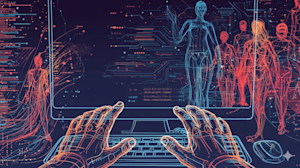
A Brox digital twin is not a generic AI persona or a synthetic profile generated by a large language model. Instead, it is a one-to-one behavioral replica of a real human being. The process starts with traditional panel recruitment: Brox pays real people to participate in in-depth interviews and captures their complete demographic profiles, consumer preferences, and decision-making patterns—always with full, informed consent. This rich, high-fidelity data is then used to build a digital twin that mirrors the original individual’s responses to surveys, choices, and behaviors. Unlike “AI slop”—the homogenized, overly-optimistic outputs from purely synthetic models—Brox’s twins produce the same variability and nuance you’d get from the actual person. This means results aren’t biased toward “correct” or healthy answers (like always choosing broccoli over junk food) but reflect real, sometimes messy, human behavior.
3. How does Brox differ from conventional synthetic audiences?
Most competitors in the digital audience space rely on purely synthetic identities—personas conjured up by LLMs that tend to produce narrow, predictable answer distributions. Because LLMs are trained on clean, curated data, they often over-index for socially desirable or “healthy” behaviors, leading to what Brox CEO Hamish Brocklebank calls “AI slop”. Brox avoids this by using real people as the foundation. Their digital twins are behavioral replicas of actual individuals, so the outputs maintain the full range of human complexity: irrational fears, contradictory preferences, and rare outlier opinions. This distinction is critical for high-stakes decisions. For example, a bank needs to know whether depositors will actually pull money out during a crisis—not just what a generic persona “should” do. Brox’s approach ensures that the data reflects real-world unpredictability, making it far more reliable for strategic planning.
4. What kinds of questions can Brox’s digital twins answer?
Brox’s platform is completely open-ended, allowing enterprise clients to ask any question they can imagine—from global geopolitical scenarios to hyper-specific product reactions. Brocklebank shared examples during a recent interview: “What happens if America invades Iran or Greenland? Will depositors at Bank of America put more money into their account or take more money out? Or, in pharmaceuticals, if RFK Jr. says something next week, will that make people more likely to take vaccines or less likely?” The twins can also be used for internal communications (e.g., how will employees react to a new CEO?) and niche product launches. Because the twins are replicas of real people with detailed demographics, businesses can filter results by age, income, location, or any other attribute to understand how specific segments would respond. The speed and flexibility mean companies can run unlimited experiments in hours, iterating on questions based on initial answers—a cycle impossible with traditional panels.
5. How does Brox recruit and maintain its panel of real people?
Brox operates much like a traditional market research panel company but with a crucial extra step. They recruit real individuals through standard channels (online ads, partnerships, etc.) and compensate them for their time. However, instead of just surveying them once, Brox conducts deep, consent-driven interviews to capture a comprehensive behavioral profile—including lifestyle choices, brand preferences, risk tolerance, and even subconscious biases. This data becomes the blueprint for each digital twin. The real individuals are not continuously surveyed; the twins are updated only when the original person provides new consent or the profile changes significantly. This approach allows Brox to maintain a stable base of 60,000 twins while respecting privacy. The company, currently just 14 people, has seen 10× revenue growth in the past year, signaling strong demand from Fortune 500 banks and pharmaceutical giants who previously had no alternative to slow, expensive traditional methods.
6. What are the practical advantages for businesses using Brox?
For businesses, the key advantage is speed without sacrificing accuracy. Traditional research often involves weeks of panel recruitment, survey design, and data cleaning—only to discover that the question you asked is no longer relevant. With Brox, you can run a survey in hours, get results, refine the question, and run it again the same day. This agility is transformative for scenario planning: a bank can simulate multiple interest-rate environments, a pharmaceutical company can test reactions to a new FDA announcement, and a retailer can gauge response to a competitor’s price drop—all before making a move. Additionally, because the twins are replicas of real people, the data retains statistical validity comparable to a traditional panel. Brox’s clients also gain the ability to run “what-if” experiments that would be impossible or unethical with real humans, such as testing extreme political or economic shocks. This positions Brox as the antithesis of the “insane” research industry, as CEO Brocklebank puts it.
Related Articles
- How a Billionaire's Investment Is Powering the World's Largest Thermal Battery: A Step-by-Step Guide
- Why Most Financial Apps Fail: The 'Feature Salad' Trap and How to Build Lasting Products
- Optimizing docs.rs Builds: A Guide to Reducing Default Targets
- Enhancing Threat Intelligence: Criminal IP and Securonix ThreatQ Unite for Context-Driven Security
- Why Your Design System Might Be Failing: The Case for 'Design Dialects'
- How to Safeguard Sensitive Data in Load Tests with Grafana Cloud k6 Secrets Management
- 5 Key Insights into Azure Integrated HSM: Open-Sourcing Trust and Transparency
- Bridging the Communication Divide: Why Misunderstandings Stifle Social Innovation Ventures