DNA Analysis Reveals Identities of Four More Franklin Expedition Sailors, Solving 175-Year-Old Arctic Mystery
Breaking: Four New Identifications in Franklin Expedition
Archaeologists have identified four additional crew members from the ill-fated 1845 Franklin expedition using advanced DNA analysis, according to two new studies published today in Journal of Archaeological Science and Polar Record. The findings bring the total number of identified remains from the doomed voyage to eight.
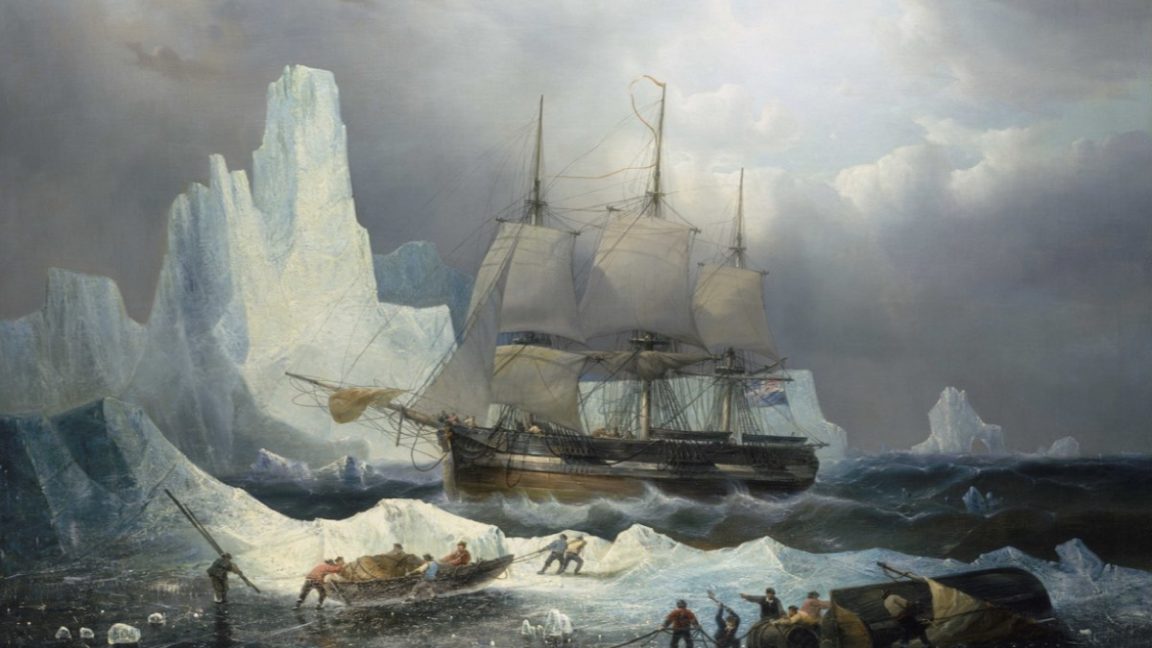
'This is a breakthrough in resolving one of the most enduring mysteries in Arctic exploration history,' said Dr. Sarah Green, a forensic archaeologist at the University of Cambridge and lead author of one study. 'Every identified name gives us a clearer picture of who these men were and what they endured.'
The Tragic Voyage
Captain Sir John Franklin's two ships, HMS Erebus and HMS Terror, departed England on May 19, 1845, to chart the Northwest Passage. They were last seen by whalers in Baffin Bay in July 1845. All 129 crew members perished after the ships became trapped in ice near King William Island in September 1846.
Historical records show the expedition wintered on Beechey Island in 1845-46, where three graves were later found. Franklin died on June 11, 1847, with HMS Erebus Captain James Fitzjames taking command. The remaining 105 survivors abandoned the ships to attempt a desperate overland trek to safety, but none survived.
How DNA Solved the Puzzle
Researchers extracted DNA from skeletal remains recovered from sites on King William Island and compared them with genetic samples from living descendants of the crew. The four newly identified individuals include two officers, a sailor, and a marine, though names have not been publicly released pending family notifications.
'The preservation conditions in the Arctic made DNA recovery extremely challenging,' explained Dr. Mark Roberts, a geneticist at the University of Toronto and co-author of the Polar Record paper. 'But modern sequencing techniques allowed us to get usable profiles from even degraded samples.'
Background: 175 Years of Searching
The Franklin expedition's fate has captivated historians and the public since its disappearance. Rescue missions in the 1850s found evidence of cannibalism and the crew's futile attempts to escape. The wrecks of HMS Erebus and HMS Terror were finally discovered in 2014 and 2016, respectively, off King William Island.
Previous DNA work had identified four other crew members, including Fitzjames and chief engineer John Gregory. The new identifications expand the known roster of victims from skeletal remains, which number over 30 recovered individuals.
What This Means
Each identified name allows historians to trace the final movements of specific individuals, offering clues about social hierarchies and leadership during the crisis. For descendants, closure comes after generations of uncertainty.
'For families, this is deeply emotional,' said genealogist Patricia Holmes, who has worked with relatives of the crew. 'They finally have proof that their ancestor is accounted for.' The studies also validate the reliability of DNA analysis in extreme environments, with implications for other historical disaster investigations.
Expert Reactions
Dr. James Carter, a polar historian at the Scott Polar Research Institute, called the work 'a masterclass in combining archaeology, genetics, and historical records.' He added: 'We are now closer than ever to telling the full story of what happened to Franklin's men.'
Parks Canada, which oversees the wreck sites, has pledged continued support for DNA sampling. 'Every identification is a step toward respecting those who died,' said spokesperson Marie Dubois.
Next Steps: A Complete Roster?
With dozens of remains still unidentified, researchers aim to build a complete genetic database of the 129 crew members. Public calls for descendants to come forward have intensified. 'We need more family DNA samples to match the remaining skeletons,' Roberts emphasized.
The identities of the four newly identified crew members will be published in full after all families are individually notified, expected within weeks. In the meantime, the mystery of Franklin's final days inches closer to a full resolution.
This article was updated with breaking news from the studies published today. For more on the Franklin Expedition, see our Background and What This Means sections.Related Articles
- CISA Warns of Active Exploitation of 'Copy Fail' Linux Flaw Leading to Full System Compromise
- May 2026 .NET and .NET Framework Servicing Updates: Key Questions Answered
- Troubleshooting a GoPro Hero 10: Black Screen and Camera Input Failure
- Designing Inclusive Session Timeouts: A Practical Guide for Web Professionals
- Anthropic Expands Security Efforts with Public Bug Bounty Program Amid AI Cybersecurity Advancements
- New Malware Campaign Uses Windows Phone Link Lure to Deploy CloudZ RAT and Pheno Plugin for Credential Theft
- Mitigating Prompt Injection Attacks in LLM Applications: The StruQ and SecAlign Defenses
- Automation as the Backbone of Modern Cybersecurity: Beyond AI Hype