Breaking: New Research Rewrites Understanding of What Triggers Lightning Strikes
Lightning Origins More Complex Than Previously Thought, Study Reveals
A groundbreaking new analysis led by physicist Joseph Dwyer has upended long-held theories about what causes lightning. The research, presented today, suggests that high-energy particles from space—not just electrical charge buildup in clouds—may play a central role in triggering bolts.
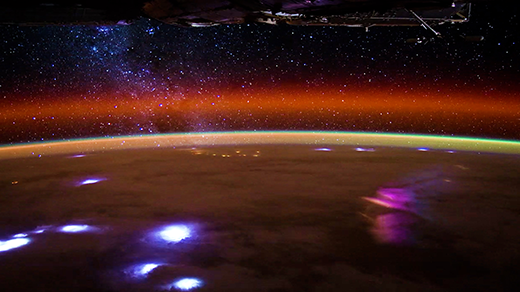
“We’ve known for decades that clouds accumulate charge, but that alone doesn’t explain the rapid onset of lightning,” said Dwyer, a professor at the University of New Hampshire. “Our work points to a cascading effect from cosmic ray particles that seeds the initial spark.”
The findings, based on satellite data and laboratory simulations, indicate that the key trigger may be a chain reaction of relativistic electrons. This “runaway breakdown” process could account for why lightning often strikes without warning even in lightly charged clouds.
From Solar Flares to Thunderheads: A Researcher’s Journey
Dwyer’s path to this discovery began far from Earth. Before turning to lightning, he studied solar flares using sensors on NASA’s Wind satellite, which orbits a million miles away. There, he analyzed particles streaming from the sun’s surface.
“The fundamental physics is similar,” Dwyer explained. “In both cases, you’re dealing with high-energy particles accelerating through electric fields. The scale changes, but the rules are the same.”
Relocating to Florida around the year 2000, Dwyer felt ready for a new challenge. “I wanted to apply what I’d learned about space weather to something right above our heads,” he said. “Lightning is the most accessible—and most dangerous—natural accelerator on Earth.”
Background: The Evolving Science of Lightning
Traditional models held that lightning begins when rising ice particles inside a thunderstorm collide, transferring charge until a huge electric field builds. But these models couldn’t explain why lightning initiates so quickly—within nanoseconds—while natural fields take seconds to form.
Dwyer’s work builds on a 1990s hypothesis that cosmic rays—high-energy particles from space—can knock electrons loose, triggering an avalanche. Recent experiments have confirmed that such avalanches produce the X-ray and gamma-ray bursts seen around lightning.
“It’s a paradigm shift,” said Dr. Maria Zaleski, an atmospheric scientist at MIT who was not involved in the study. “This explains several long-standing puzzles, like why winter lightning is rarer and why some storms produce more lightning than others.”
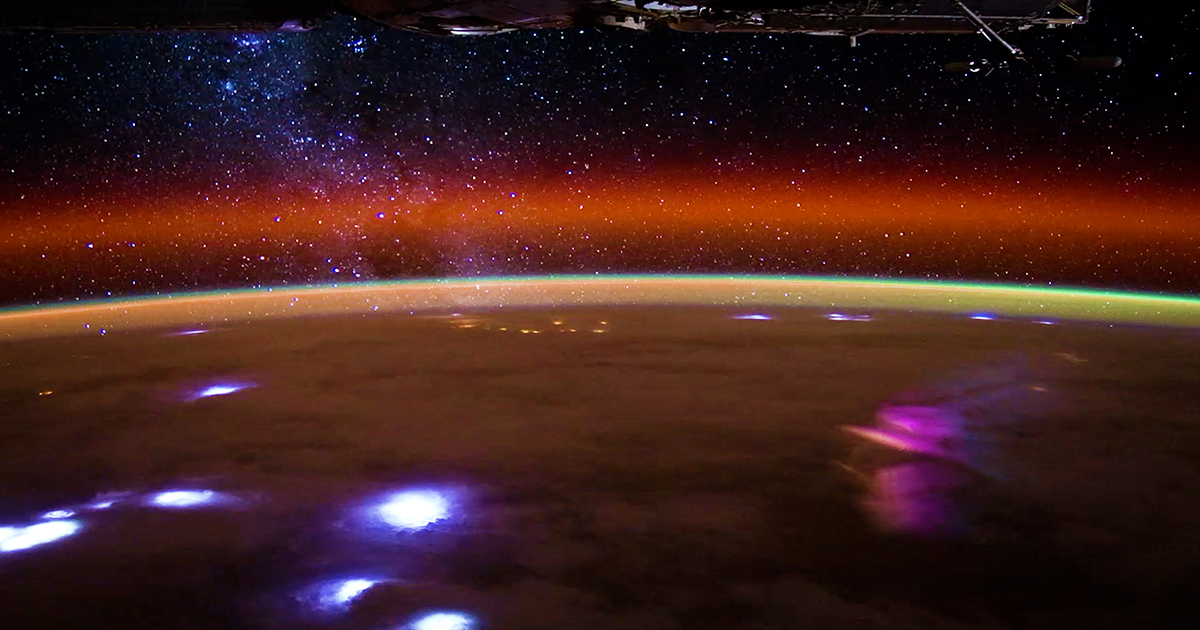
What This Means: Safer Skies and Better Forecasts
The new understanding has immediate practical implications. If cosmic rays are a primary driver, lightning prediction models can incorporate real-time space weather data—like solar storm activity—alongside standard meteorological inputs.
“We could soon see a system that warns airports, power grids, and outdoor venues not just when clouds are forming, but when the cosmic trigger is likely,” Dwyer said. “That would save lives and reduce billions in damage annually.”
Additionally, the research opens doors for developing lightning-suppression technology. By understanding the exact particle cascade, engineers might one day design devices to safely discharge storm clouds before a strike occurs.
- Key takeaway: Lightning may be a product of both atmospheric charge and cosmic ray particles.
- Next steps: Dwyer’s team plans to launch balloon-borne detectors to measure cosmic ray fluxes inside active storms.
- Funding: NASA and the National Science Foundation have committed additional grants for follow-up studies.
Scientific Community Responds
Other experts are calling the work “provocative but credible.” Dr. James Thornton, a lightning researcher at the University of Arizona, noted: “If Dwyer is right—and the evidence is mounting—then every textbook on atmospheric electricity will need a rewrite.”
The full paper is published in the journal Geophysical Research Letters. Dwyer will present his findings at the annual American Geophysical Union meeting next week.
For now, one thing is clear: our understanding of lightning is far from complete—and that’s exactly what makes it exciting.
Related Articles
- RaaS Group The Gentlemen Surges With 320+ Victims as Proxy Malware SystemBC Tunnels Into Corporate Networks
- The Hidden Heart Risk: How to Stabilize Your Bedtime and Protect Your Cardiovascular Health
- A Detailed Guide to Analyzing Spiral Galaxy NGC 3137 from Hubble Data
- The Truth About Dying in Space: Debunking Sci-Fi Myths
- Quantum Leap: Photon State Teleported Across 270 Meters Between Independent Quantum Dots
- Reversing Liver Aging Through Gut Microbiome Rejuvenation: A Step-by-Step Protocol
- 8 Key Facts About the Blood Test That Could Predict Depression Before It Strikes
- 5 Reasons Scientists Think Venus Is Volcanically Active (and How a 2022 Eruption Helps Confirm It)