Psyche Probe Snaps Stunning View of Mars Before Gravity Assist Flyby
Introduction
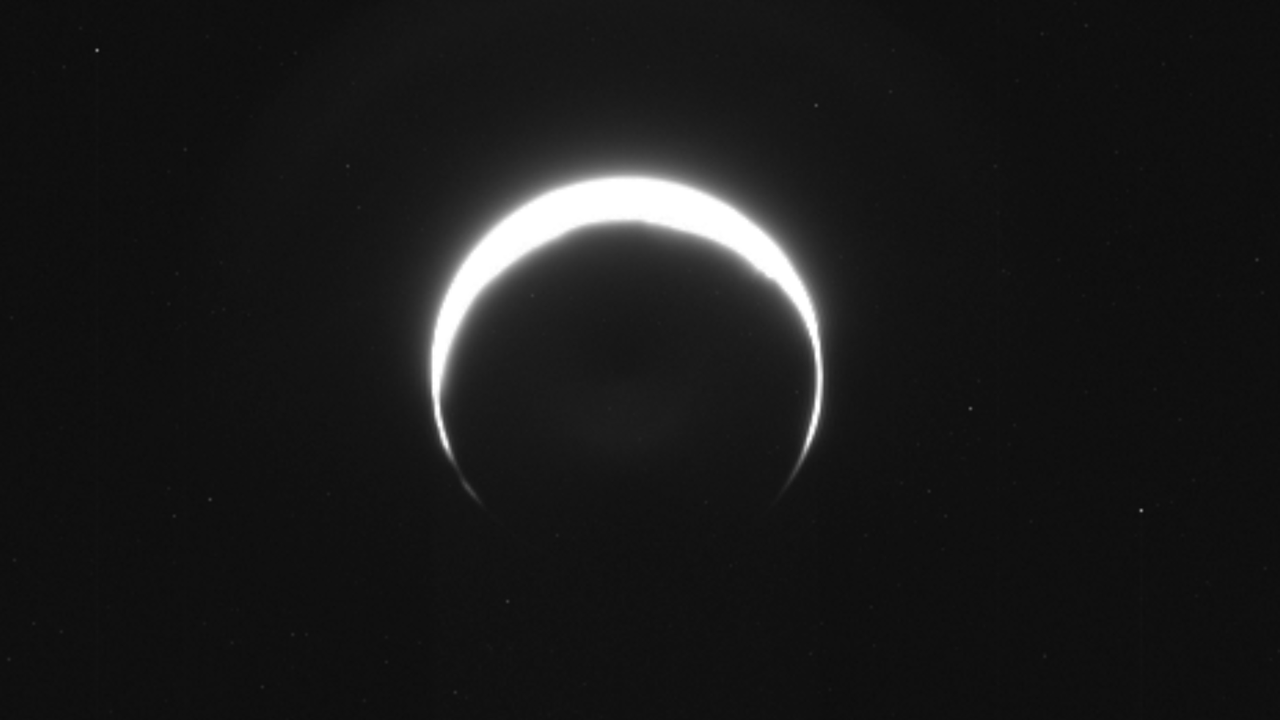
NASA's Psyche spacecraft, on its way to the metal-rich asteroid 16 Psyche, has captured a breathtaking image of Mars. The photo, released by the agency, shows the Red Planet in sharp detail, with its dust storms and ice caps clearly visible. Taken just days before the probe's scheduled flyby on May 15, the image serves both as a stunning scientific snapshot and a critical test of the spacecraft's imaging system.
The Psyche Mission: Journey to a Metal Asteroid
Launched in October 2023, the Psyche mission aims to explore a unique asteroid made mostly of iron and nickel—thought to be the exposed core of an early planetesimal. The spacecraft will spend about 21 months orbiting 16 Psyche, studying its composition, magnetic field, and surface features. To reach its target in the main asteroid belt between Mars and Jupiter, Psyche relies on a gravity assist from Mars, swinging around the planet to gain speed without expending extra fuel. This flyby is a crucial maneuver.
A Martian Photograph: Test of the Imager
The image was captured by Psyche's Multispectral Imager, a camera system designed to photograph the asteroid in visible and near-infrared light. Engineers used the Mars pass as a perfect opportunity to calibrate the imager and practice pointing the spacecraft. The resulting photo—taken from a distance of about 100,000 kilometers—shows a crescent Mars, with the planet's southern polar ice cap appearing as a bright patch. The image was processed to enhance contrast and bring out faint atmospheric features.
The Flyby and Its Importance
On May 15, Psyche will perform its closest approach to Mars, coming within approximately 1,000 kilometers of the planet's surface. This gravity assist will increase the spacecraft's velocity by roughly 6 kilometers per second, slinging it toward the asteroid belt. Without this boost, Psyche would take much longer to reach 16 Psyche. The flyby also offers a rare chance to study Mars from a unique trajectory—adding data to ongoing research on the planet's atmosphere and gravity field.
Not a Solar Eclipse
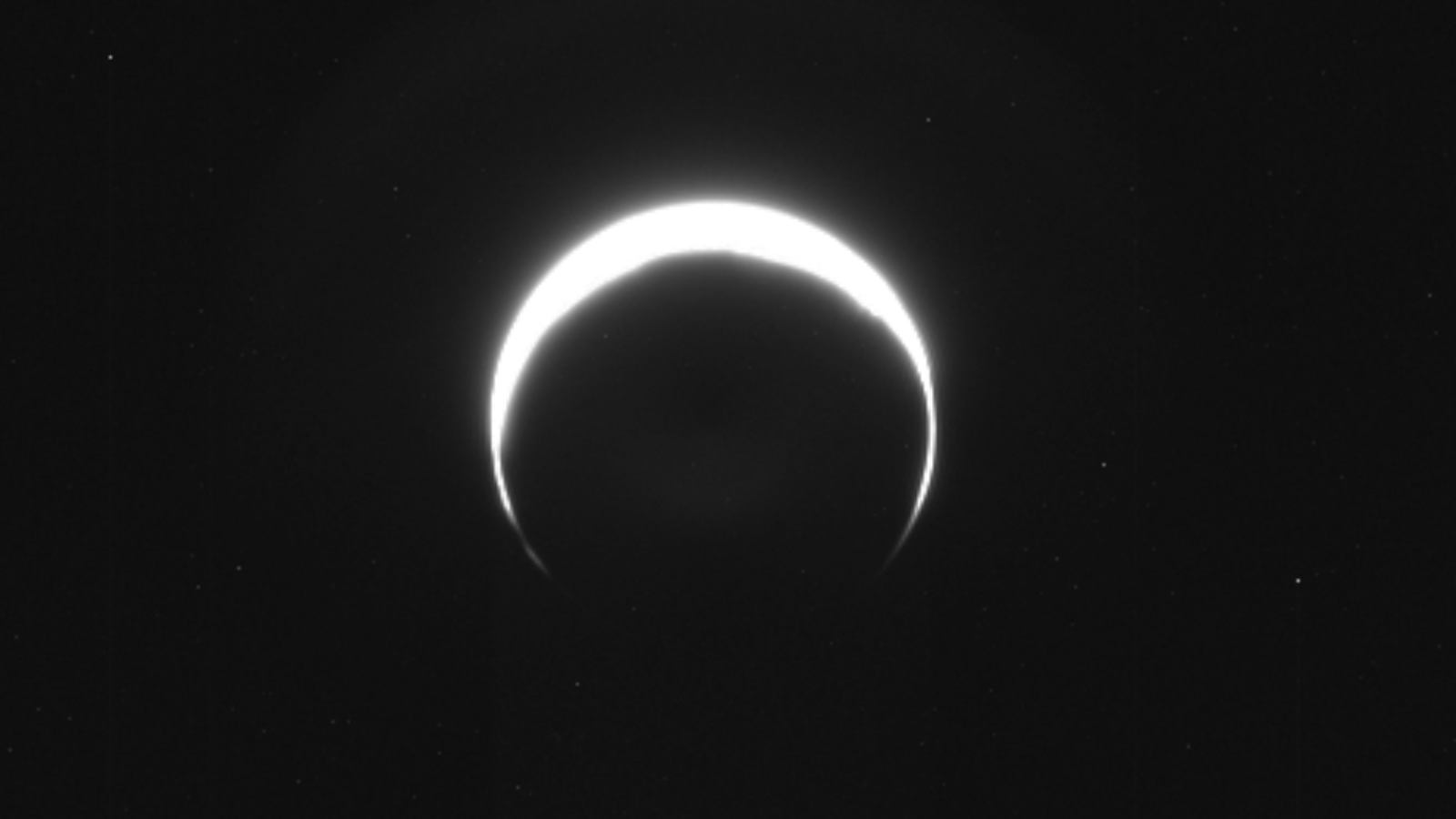
At first glance, the image might be mistaken for a solar eclipse because of the dark curve of Mars against the blackness of space. However, the bright crescent is the planet itself, not the Sun. The Sun is out of frame, illuminating Mars from behind. This angle creates a stunning silhouette effect, emphasizing the thin crescent of the Martian disc. Many viewers were quick to compare the image to pictures of Earth during a solar eclipse, but this is purely a coincidence of geometry.
What the Image Reveals
Beyond its aesthetic appeal, the photo provides scientific insight. The bright southern polar cap indicates carbon dioxide ice, while the subtle blue-gray haze along the terminator is likely water-ice clouds suspended in the atmosphere. The slightly reddish tint on the sunlit side is due to iron oxide dust, giving Mars its iconic color. These details help planetary scientists understand seasonal changes on Mars, even from a flyby perspective. The image also confirms that Psyche's imager is functioning correctly—a good omen for future observations of 16 Psyche.
Next Steps for Psyche
After the Mars flyby, Psyche will continue on its journey, with arrival at the asteroid expected in August 2029. Over the next several years, the spacecraft will perform additional course corrections and science calibrations. Data from the flyby—including the Mars image—will be transmitted back to Earth and analyzed by the mission team. Meanwhile, the public can follow along as NASA shares more snapshots from this historic mission.
In summary, the Psyche probe's image of Mars is more than just a pretty picture: it is a milestone in a bold mission to unlock the secrets of a metal world. The flyby on May 15 will be a critical step toward that goal, and the image captured ahead of it serves as a reminder of the beauty and complexity of our solar system.
Related Articles
- SpaceX Shifts Focus: Falcon 9 Launch Cadence Drops as Starship Takes Center Stage
- Climate Change's Toll on Agriculture: Why Food Insecurity Now Threatens All Nations
- Everything You Need to Know About the Latest MacBook Pro Deal: M5 Chip, 24GB RAM, 1TB Storage at $1,699
- Samsung Galaxy's Stellar Hardware and Software: Why Its Best Apps Have Stalled
- 2026 Poised to Overtake 2024 as the Hottest Year, Says Renowned Climatologist
- Revolutionary GRASP Planner Makes Long-Horizon Robot Control Feasible with World Models
- Pentagon Releases 162 UFO Files on New Government Portal; Most Remain Heavily Redacted
- 7 Ways Exploration Labs Is Protecting Earth From Killer Asteroids