How to Produce Low-Emission Cement Without Limestone
Introduction
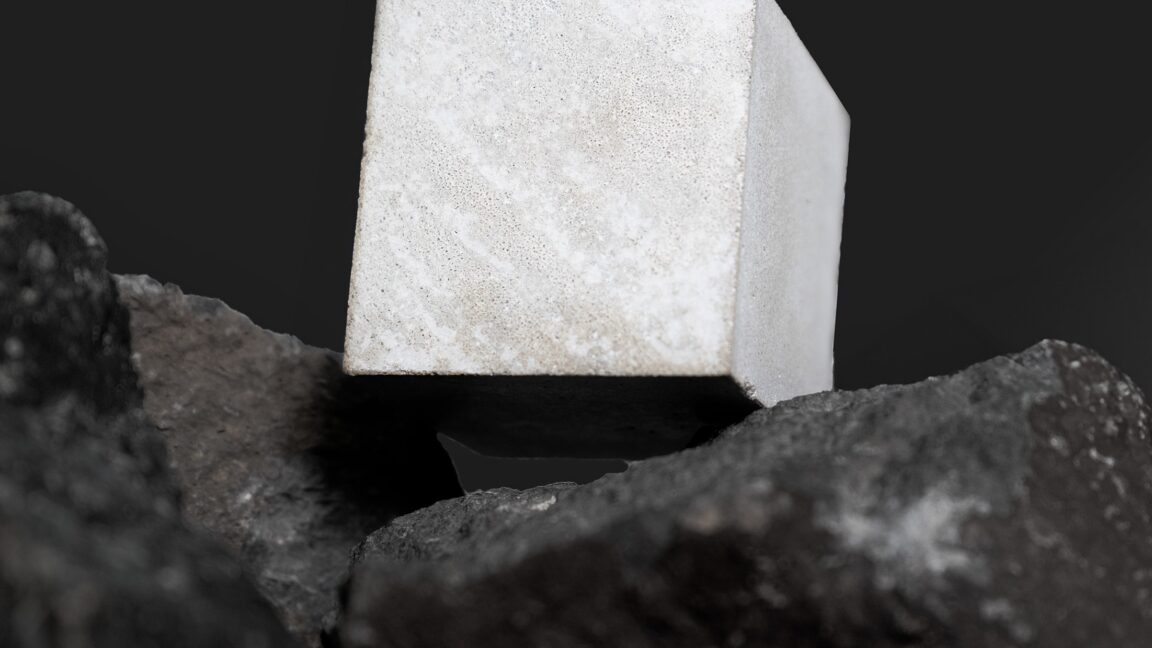
Cement manufacturing is responsible for roughly 8% of global CO₂ emissions. While improvements in energy efficiency and fuel switching help, the real challenge lies in the unavoidable chemical reaction: when limestone (calcium carbonate) is heated to produce lime (calcium oxide), CO₂ gas is released. These direct process emissions often exceed those from burning fuel. A groundbreaking study published in Communications Sustainability proposes a radical shift: abandon limestone altogether and use a different type of rock. This guide walks you through the conceptual steps to replicate this innovation, from understanding the problem to evaluating the final product.
What You Need (Prerequisites)
- Alternative calcium‑rich rock: A silicate‑based rock (e.g., wollastonite, anorthite, or other calcium‑silicate minerals) that does not contain carbonate groups.
- Crushing & grinding equipment: Jaw crusher, ball mill, or similar to reduce rock to a fine powder.
- High‑temperature furnace or kiln: Capable of reaching at least 900–1000 °C (though potentially lower than traditional kilns).
- Additives: Clay, alumina, or other pozzolanic materials to adjust chemical composition and ensure proper setting.
- Testing apparatus: Equipment to measure compressive strength, setting time, and CO₂ emissions (if possible).
- Safety gear: Heat‑resistant gloves, goggles, and ventilation for handling fine dust and high temperatures.
Step‑by‑Step Guide
- Step 1: Understand the Chemistry of Conventional Cement
Portland cement relies on heating limestone (CaCO₃) to release CaO and CO₂. The CO₂ is a direct process emission. The goal here is to avoid carbonate decomposition entirely. Instead, you will use a rock where calcium is bound to silicate groups (e.g., CaSiO₃). When heated, these silicates can react to form cementitious phases without releasing CO₂. Read the full study to grasp the exact mineral transformations. - Step 2: Source the Right Rock
Identify a calcium‑silicate rock that is abundant and has a high calcium content. Wollastonite (CaSiO₃) is a prime candidate; others include anorthite (CaAl₂Si₂O₈) and gehlenite (Ca₂Al₂SiO₇). Ensure the rock is free of carbonates (test with dilute acid – if it fizzes, it contains carbonate and will still release CO₂). Obtain a sufficient quantity (several kilograms for pilot tests). - Step 3: Crush and Grind the Rock
Reduce the rock to a fine powder with a particle size similar to cement (about 10–50 microns). A ball mill or jet mill works best. The finer the powder, the more reactive it will be during heating and hydration. Aim for a Blaine fineness comparable to ordinary Portland cement (around 300–400 m²/kg). - Step 4: Heat the Powder (Calcination Alternative)
Unlike limestone, this rock does not need to be “calcined” at extreme temperatures to drive off CO₂. Heat it to a temperature where the silicate structure becomes reactive – typically 900–1200 °C, but possibly lower. The key is to partially melt or react the powder to form dicalcium silicate (C₂S) and other cement clinker minerals. Monitor temperature carefully; overheating may cause unwanted glass formation. Use a rotary kiln or muffle furnace with controlled atmosphere. - Step 5: Blend with Additives
After heating, the resulting material may need adjustment. Mix it with clay, alumina, or small amounts of gypsum (like in conventional cement) to regulate setting time and improve workability. Typically, a mix of 80–95% heated rock powder and 5–20% additives is used. Grind the blended material again to ensure homogeneity. - Step 6: Test the Cement Properties
Prepare standard mortar cubes (e.g., 1 part cement to 3 parts sand by weight, with a water‑cement ratio of 0.5). Cast and cure them according to ASTM C109. After 7 and 28 days, measure compressive strength. Compare with Portland cement. Also check setting time (Vicat test) and soundness. Additionally, measure the CO₂ emissions produced during the heating step (if possible) to confirm near‑zero direct process emissions. - Step 7: Scale Up & Optimize
If lab results are promising, move to pilot scale. Test different rock sources, heating profiles, and additive ratios. The ultimate goal is to achieve strength comparable to ordinary cement while keeping carbon footprint low. Consider using waste heat or renewable energy for the kiln to further reduce emissions.
Tips for Success
- Rock selection is critical: Not all calcium‑silicate rocks work. Wollastonite is most studied, but local availability may dictate choice. Always check for carbonate contamination.
- Energy savings: Because you avoid the endothermic calcination reaction, energy consumption can drop significantly. Monitor kiln fuel use to quantify savings.
- Work with a materials scientist: This process is still emerging. Collaborate with experts in cement chemistry to fine‑tune the mineral phases.
- Regulatory compliance: New cement types must meet building codes. Keep records of all tests for certification bodies.
- Remember the big picture: Even if direct process emissions disappear, overall life‑cycle emissions (including mining, grinding, transport) still matter. Use local materials and efficient logistics.
By following these steps, you can contribute to a future where cement production no longer burdens the planet with CO₂. The shift from limestone to silicate rocks is a profound change – but as the Communications Sustainability paper shows, it is scientifically feasible. Start small, scale wisely, and help clean up one of the world’s dirtiest industries.
Related Articles
- Rivian Supercharges LA Presence: 150+ Fast Chargers, New Showrooms at Caruso Retail Hubs
- Empowering Flutter and Dart Development with AI Agent Skills
- How to Electrify Your City's Bus Fleet: Lessons from Sweden's 103 New Electric Buses
- WebAssembly JSPI Gets a Streamlined API: Key Updates and Migration Guide
- Greenlane's Electric Truck Charging Expansion: A Texas-Sized Leap Forward
- The SECURE Data Act: A Critical Examination of Its Privacy Provisions
- How to Migrate Your Flutter Websites to a Unified Dart Stack with Jaspr
- AI and Energy: A New Chapter for American Leadership