Advanced Technology Reveals Pompeii Victim Was Likely a Roman Doctor
Introduction
In a remarkable fusion of archaeology and cutting-edge technology, researchers have identified one of the victims of the catastrophic eruption of Mount Vesuvius in 79 CE as likely a Roman doctor. The Pompeii Archaeological Park announced the discovery, which was made possible through a combination of advanced CT scans and 3D digital reconstruction. This finding not only sheds light on the life of a single individual but also offers a deeper understanding of the medical practices and social roles in ancient Roman society.
The Eruption of Mount Vesuvius
Mount Vesuvius erupted with a force equivalent to approximately 100,000 times the atomic bombs dropped on Hiroshima and Nagasaki at the end of World War II. The volcano spewed molten rock, pumice, and hot ash over the cities of Pompeii and Herculaneum. Most residents perished from asphyxiation, choking on thick clouds of noxious gas and ash. However, some victims likely died instantaneously from the intense heat of fast-moving pyroclastic flows, which reached temperatures high enough to boil brains and explode skulls.
Pompeii and Herculaneum: Cities Frozen in Time
The cities of Pompeii and Herculaneum, located near modern-day Naples in Italy, were thriving Roman settlements until the eruption buried them under meters of volcanic debris. The catastrophic event preserved buildings, artifacts, and human remains in extraordinary detail, providing an unparalleled snapshot of Roman life in the first century CE.
The Casts of Pompeii
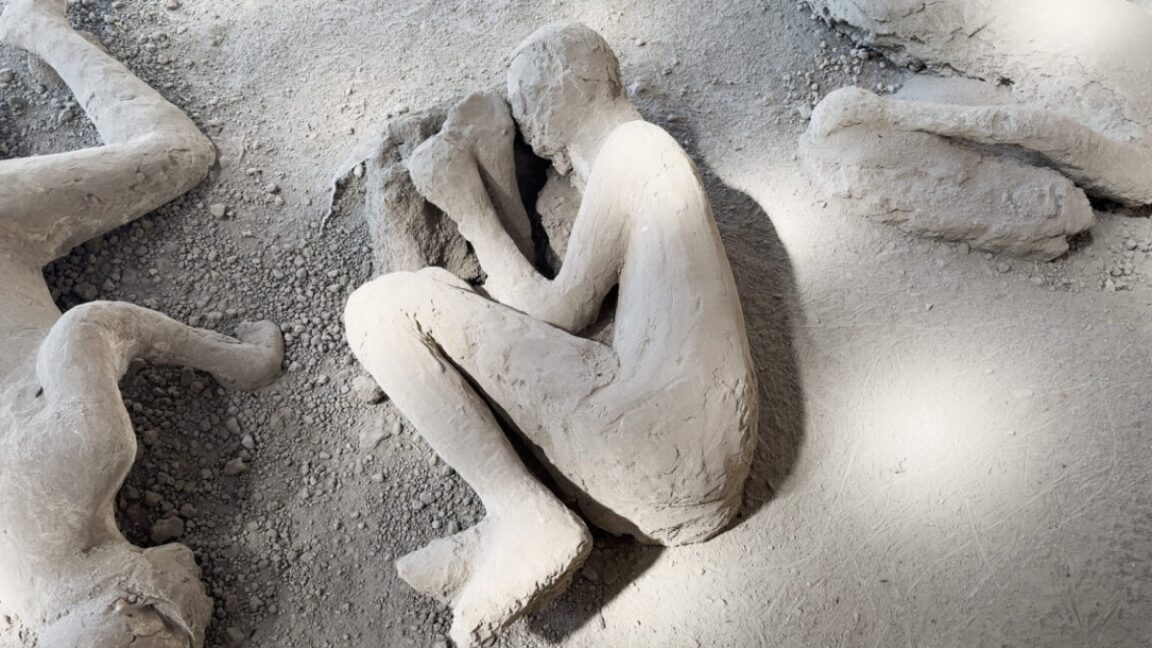
In the 19th century, archaeologist Giuseppe Fiorelli developed a method to create casts of the victims. By pouring liquid plaster into the voids left by decomposed soft tissue within the hardened ash, he produced hauntingly detailed forms of the deceased. Around 1,000 bodies have been discovered in the ruins, and 104 plaster casts have been preserved. A major restoration effort on 86 of these casts began about a decade ago, during which researchers employed CT scans and X-rays to determine if complete skeletons were present.
Modern Technology Meets Ancient History
CT Scans and 3D Digital Reconstruction
The recent identification process involved subjecting a specific plaster cast to high-resolution CT scans. These scans revealed the skeletal remains inside, which were then used to create a 3D digital reconstruction of the individual. This allowed archaeologists to examine the bones in unprecedented detail without damaging the cast. The analysis showed that the person was a middle-aged man who exhibited several characteristics typical of a medical professional in ancient Rome.
Who Was the Doctor? Clues from the Remains
The skeleton showed signs of wear consistent with a life of manual work, but also evidence of a high social standing. The presence of a small container often used for medical instruments, along with the man’s age and posture, led experts to conclude he was likely a doctor. The container, or capsa medica, would have held tools like scalpels, probes, and forceps. Additionally, the bones showed healed fractures and evidence of repetitive motions associated with medical procedures. The man was found in a well-preserved part of Pompeii known as the House of the Surgeon, which reinforces the theory of his profession.
The Significance of the Discovery
This identification is more than a historical curiosity. It provides tangible evidence of the medical knowledge and practices in Pompeii before the eruption. It also demonstrates how modern technology can extract new information from old archaeological finds. The use of CT scans and 3D reconstructions allows scientists to study ancient remains non-invasively, preserving the integrity of the original casts while gaining insights into the lives of those who perished.
Future Research and Public Impact
The success of this project has paved the way for similar analyses of other Pompeii casts. Researchers hope to create a comprehensive database of the victims, revealing demographic patterns and societal roles. The story of the Pompeii doctor also captivates the public imagination, reminding us of the human stories behind the ruins. As technology advances, we can expect even more detailed portraits of these ancient individuals to emerge.
Conclusion
The identification of a Roman doctor among the victims of Mount Vesuvius is a testament to the power of interdisciplinary collaboration. By combining archaeology with modern imaging techniques, we continue to unravel the mysteries of Pompeii, bringing us closer to the people who lived and died there nearly two thousand years ago. This discovery not only enriches our understanding of history but also underscores the enduring human fascination with the past.
Related Articles
- Microsoft 365 Subscribers Get Critical Security Patch and Copilot Upgrade in Latest Update Wave
- Ubuntu 26.10 'Stonking Stingray' Officially Set for October 2026 Release
- From Concept to Scale: Engineering Friend Bubbles for Billions
- Redefining Your Workforce for AI: A Strategic Guide Inspired by Intuit's Restructuring
- Solateria Breaks the Mold: Difficulty Options Don't Sacrifice Challenge in Soulslike Metroidvania
- Reclaiming User Autonomy: How to Curb Digital Manipulation by Tech Giants
- UK Regulator Investigates Microsoft's Business Software Dominance and AI Lock-in
- Swift 6.3 Unveiled: Unified Build System, Community Insights, and More